Why Your “Healthy” Diet Might Be Failing Your Hormones
Most women eating clean still deal with brutal PMS. That’s not random. The diet advice you’re following was designed for men. Not women with fluctuating hormone levels.
Men’s bodies operate on a 24-hour cycle. Women’s bodies follow a roughly 28-day hormonal rhythm. Yet nearly all nutritional guidelines ignore this difference.
The Male Default Problem
Until the 1990s, medical studies routinely excluded women of reproductive age. Researchers viewed our hormonal cycles as “complicating variables.”
The National Institutes of Health didn’t require including women in clinical trials until 1993. Decades of nutritional science studied exclusively male subjects, then applied those findings to everyone.
When research on female athletes started being published, it revealed a critical gap. Women metabolize nutrients differently across the menstrual cycle. But standard diet recommendations give everyone the same advice.
What Changes Throughout Your Cycle
Your body operates differently during the first half of your cycle compared to the second. During the follicular phase, days 1 through 14, estrogen climbs steadily. This hormone shift means your body prioritizes specific nutrients that help process and clear estrogen efficiently.
Once you hit the luteal phase around day 15, progesterone becomes dominant. This shift cranks up your metabolic rate by 5-10%, meaning your body burns more calories just existing. This is also when missing key nutrients becomes obvious through PMS symptoms. That intense chocolate craving hitting you before your period isn’t a character flaw. Your body is asking for magnesium, which it needs to produce serotonin and keep your uterine muscles from cramping.
Something else that shifts throughout your cycle that almost no one talks about: your insulin sensitivity. During the follicular phase, when estrogen is high, your body is more sensitive to insulin, meaning it processes carbohydrates and sugar more efficiently. But once you enter the luteal phase and progesterone takes over, insulin sensitivity drops. Your body becomes temporarily more resistant to insulin, which can cause blood sugar to spike more easily after eating the same foods you had no issue with two weeks earlier.
That “why am I so hungry” and “why do I feel so foggy” feeling before your period? A lot of it comes down to blood sugar. When your cells aren’t responding to insulin as effectively, energy becomes harder to regulate, and cravings (especially for sugar and carbs) ramp up as your body tries to compensate.
This is why eating the exact same way all month long doesn’t work. Your body literally has different nutritional needs depending on where you are in your cycle.
The Nutrients You’re Missing
Most women are deficient in specific minerals that directly affect hormone balance. Magnesium deficiency affects a significant portion of Americans, with research showing approximately 45-75% don’t meet recommended intake levels. For women, magnesium helps metabolize estrogen and produce progesterone. Low levels lead to cramps, anxiety, and sleep problems.
The USDA reports that women consume only 60-70% of recommended daily zinc. Zinc helps your body clear out used hormones. Without enough, you get hormonal acne and irregular cycles.
Meet Seed Cycling: The TikTok-Viral Protocol Rooted in Naturopathic Medicine
If you’ve spent any time on the wellness side of TikTok, you’ve probably seen it: women filming their morning rutine, dropping a tablespoon of seeds into a smoothie, and explaining which phase of their cycle they’re in. Seed cycling has racked up millions of views, but the practice itself is anything but new.
Seed cycling is a food-based protocol that originated in naturopathic medicine. The idea is simple: different seeds contain different nutrients, and those nutrients happen to align with what your body needs during different phases of your cycle. Rotate the right seeds at the right time, and you’re giving your hormones the raw materials they need to stay in balance.
It’s not a supplement. It’s not a medication. It’s food, just eaten with intention. And for a growing number of women who are tired of being told their symptoms are just “part of being a woman,” it’s become a starting point for feeling better.
Why Seed Cycling Works
Seed cycling is a naturopathic protocol that addresses the nutrient gap problem.
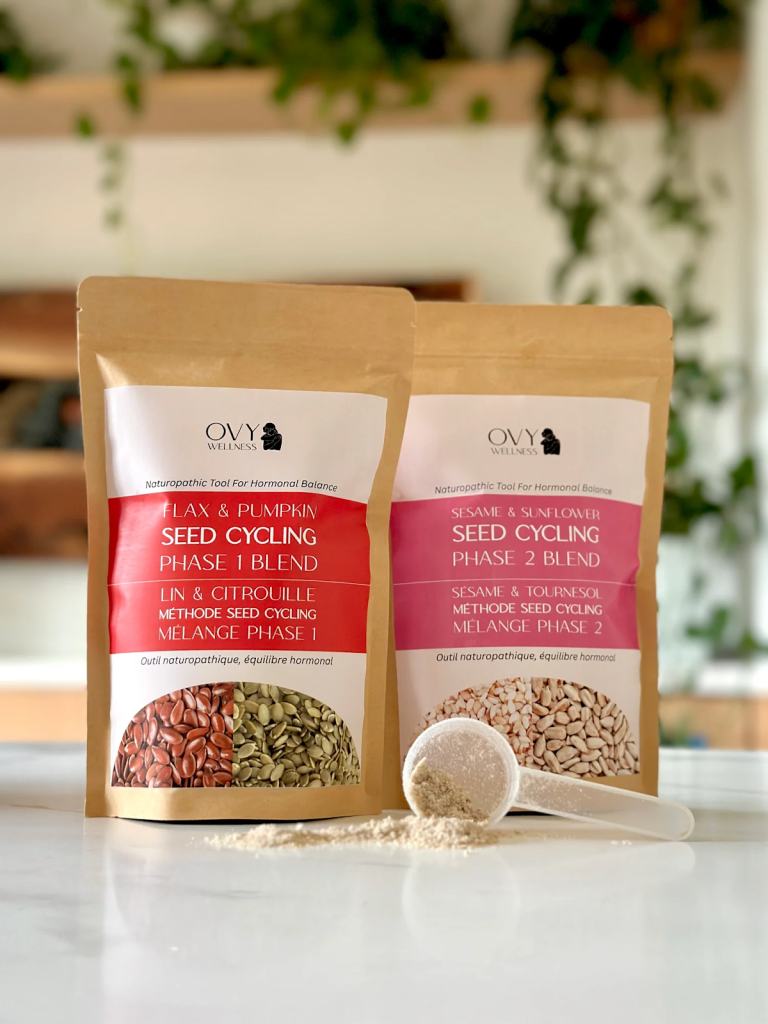
The practice: from days 1 to 14, consume 1 tablespoon each of ground flaxseeds and pumpkin seeds daily. Then, on days 15 to 28 switch to 1 tablespoon each of sunflower and sesame seeds daily.
Flaxseeds contain lignans that help metabolize excess estrogen. Pumpkin seeds pack zinc and magnesium for progesterone production. Sunflower seeds deliver vitamin E and selenium for detoxification.
A 2023 study examined 45 women with PCOS who followed seed cycling. After 12 weeks, participants showed improvements in follicle-stimulating hormone, luteinizing hormone, and testosterone levels.
A 2024 trial with 290 women found PCOS patients combining seed cycling with medication showed better hormonal balance than medication alone.
The Consistency Problem
Knowing you should eat certain seeds doesn’t mean you’ll grind them fresh every morning while rushing out the door. Most people quit seed cycling within two weeks, not because it doesn’t work, but because daily prep feels like another chore.
That’s why a new wave of brands has emerged with ready-made seed cycling products designed to take the friction out of the ritual entirely. Ashley Azouri experienced this firsthand. After her period cramps didn’t respond to anything else, she tried seed cycling. But she couldn’t maintain it until she meal-prepped the seeds into energy bites. That’s when her symptoms disappeared.
She founded CycleSnax to solve this. The company makes chocolate follicular phase bites with flax and pumpkin seeds, and cookie dough luteal phase bites with sesame and sunflower. Each bite contains the daily amount, sweetened naturally with dates and maple syrup.
What to Expect
Seed cycling won’t fix severe endometriosis or eliminate medical treatment needs. It provides targeted nutrition based on where you are in your cycle.
Some women notice changes in one cycle. Others need three months. Results depend on health, stress, and diet.
FAQ
Does seed cycling work for everyone? Results vary. Women with mild to moderate hormonal symptoms tend to see the most noticeable changes. Those with severe conditions like endometriosis may need seed cycling alongside medical treatment.
How long before I see results? Most practitioners recommend trying for at least three full cycles (three months) before evaluating effectiveness. Some women notice changes sooner.
Can I do seed cycling while on birth control? Birth control suppresses natural hormonal fluctuations, so seed cycling’s phase-based approach may not apply. The seeds still provide nutritional benefits, though.
What if my cycle is irregular? Start based on moon phases or a 28-day calendar until your cycle regulates. The practice itself may help establish more regular patterns over time.
Do the seeds need to be ground? Yes. Whole flaxseeds pass through your digestive system undigested. Grinding breaks down the hull so your body can access the nutrients.
The Bigger Picture
Interest in seed cycling reflects something larger. Women are done accepting symptoms as “just how periods are.”
After decades of symptoms being dismissed or treated only with birth control, women want food-based approaches. The cycle tracking app market reached $1.4 billion in 2023. Women adjust workouts and change what they eat based on hormonal phases.
Your body isn’t randomly difficult. It’s cycling through phases with different nutritional requirements. When you match eating to your biology instead of following advice designed for men, your body responds.
For more information about cycle-specific nutrition in convenient snack form, visit www.cyclesnax.ca.