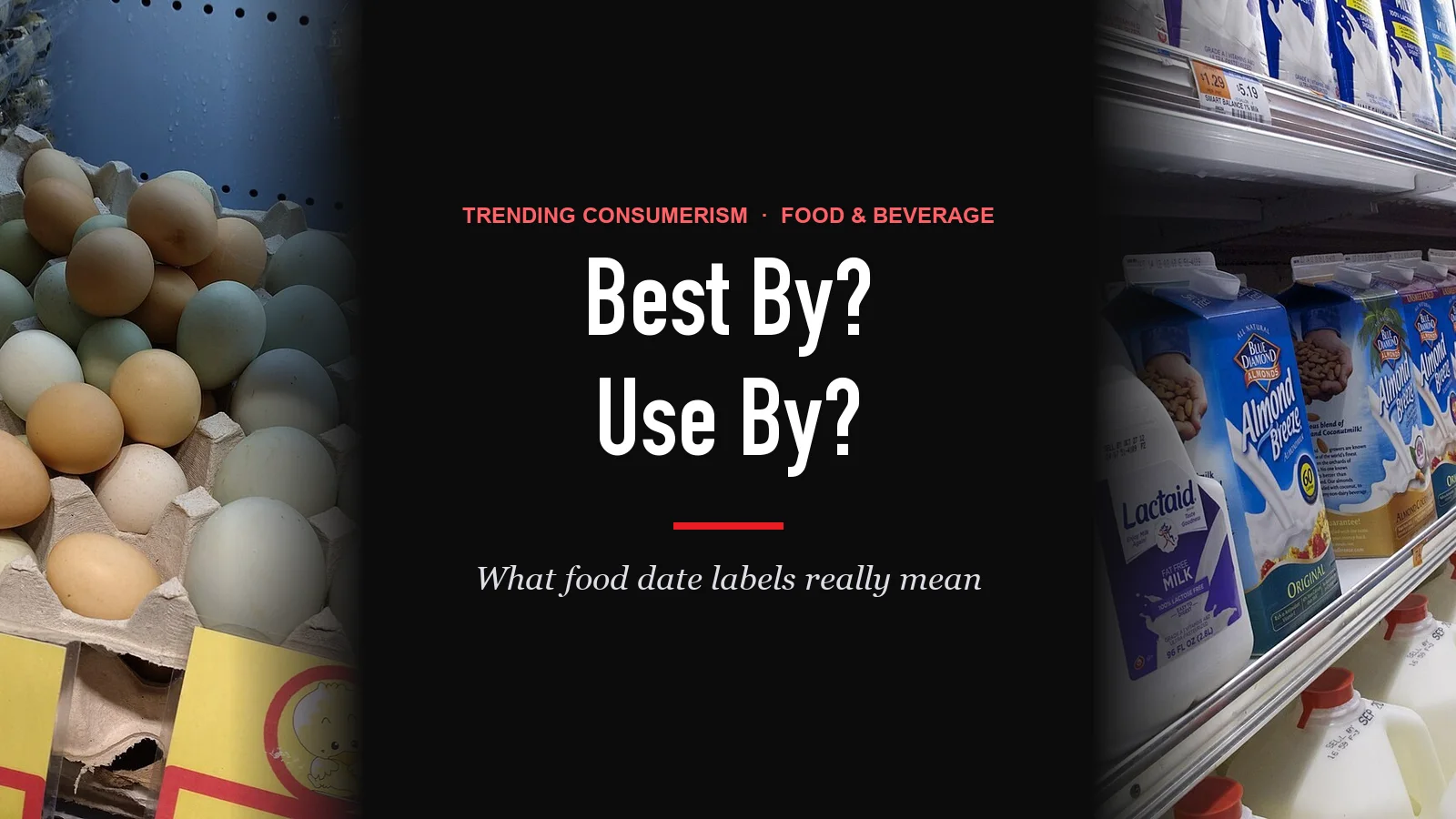
Best By, Use By, Sell By: What Food Date Labels Really Mean
Picture a Tuesday night in front of an open refrigerator. A cup of yogurt says “best by” last Friday. A carton of eggs says “sell by” two days ago. A package of sliced turkey says “use by” tomorrow.
The trash can is right there. So is the grocery receipt from Sunday, and it was not small.
You stand there doing the math most households do every week: toss it and be safe, or keep it and save money? The dates printed on those packages are supposed to settle the question. Most of the time, they do not mean what we think they mean.
Quick answer
"Best by" and "best if used by" dates mark peak quality, not safety. "Use by" is also generally a quality date, except on infant formula, where it must be followed. "Sell by" tells stores how long to display a product. Food past these dates can often be eaten if stored properly and it looks and smells normal.
Key takeaways
- "Best by" dates are about quality; food is often safe to eat afterward.
- "Use by" is not a federal safety date, except on infant formula.
- "Sell by" guides stores; FSIS-based guidance says eggs keep 3 to 5 weeks beyond it.
- ReFED says date-label confusion drives over 3.5 million tons of food waste a year.
- Keep the fridge at 40 F or below and freeze food before it spoils.
What does “best by” actually mean?
A “best by” or “best if used by” date is about quality, not safety. It is the maker’s estimate of when the food will taste and look its best.
“All of those dates are really there for food quality. They aren’t there for safety,” Rutgers University food safety expert Donald Schaffner told NPR in December 2024. After the date, he said, the food may not taste as good but is still safe to eat.
The FDA and USDA have spent years encouraging food companies to use one phrase, “best if used by,” for quality dates. According to the NPR report, research by Harvard Law School’s Emily Broad Leib and colleagues found that shoppers are most likely to read that phrase correctly, as a sign of peak quality rather than a deadline.
Is a “use by” date a safety deadline?
Usually not, with one important exception. The FDA’s consumer guidance on storing food safely describes a “use by” date as the manufacturer’s recommendation for best flavor or quality, and says plainly that it is not a food safety date.
The exception is infant formula. The FDA says formula must be used by the “use by” date on the package. NPR reports that federal law requires that date because formula’s nutrient value declines over time, which could leave babies short on nutrients.
Some companies do use “use by” on perishable foods to signal when to throw them out, and certain foods deserve extra caution. Broad Leib told NPR that deli meats and egg or chicken salads do not stay good for long. When a date sits on a high-risk food, treat it with more respect.
What does “sell by” mean for shoppers?
A “sell by” date is mainly for the store. The University of Connecticut’s extension program, citing USDA’s Food Safety and Inspection Service, says sell-by items are generally safe after that date but may begin to lose flavor or eye appeal.
Eggs are a good example. The same UConn guidance, drawing on FSIS timelines, says eggs can keep for three to five weeks beyond the “sell by” date. That carton in the hook is very likely fine if it has been kept cold.
Sell-by dates are starting to disappear from some shelves. California’s food date labeling law, AB 660, took effect July 1, 2026. According to the California Department of Food and Agriculture, it bans consumer-facing “sell by” dates, though coded dates for stock rotation are still allowed. Eggs and infant formula are exempt.
Why are food date labels so confusing?
Because, outside of infant formula, there is no federal rule requiring them. NPR reports that no federal regulation requires food date labels at all, so companies choose their own wording. Some states add their own requirements, which Broad Leib said can make it hard for companies to adopt a single phrase.
California is trying to fix that within its borders. Under AB 660, quality dates must read “BEST if Used by” or “BEST if Used or Frozen by,” and safety dates must read “USE by” or “USE by or Freeze by,” according to the state agriculture department. Because many national brands sell in California, some shoppers elsewhere may start seeing the same wording.
At the federal level, ReFED’s 2026 U.S. Food Waste Report points to the bipartisan Food Date Labeling Act as a bill with the potential to reduce the more than 3.5 million tons of food discarded each year because of consumer confusion over date labels.
Before you buy
Use this checklist on your next grocery run:
- Check the fridge and pantry before you write the list.
- Read the date phrase, not just the number: best by, use by or sell by.
- Grab meat, deli items and dairy last so they stay cold.
- Buy perishables in amounts you can eat or freeze within a few days.
- Keep infant formula on a strict date rotation.
How much food and money do households throw away?
A lot, and the date on the package is part of the reason. NPR, citing published research, reports that 84% of consumers throw out food at least some of the time because of the date label, and 37% say they do it most of the time.
ReFED, a nonprofit that tracks food waste, estimates that total surplus food in the U.S. was 70 million tons in 2024, about 29% of the food supply. Its 2026 report puts the total value at $380 billion and says consumers spent an average of $762 per person on food that went to waste.
There is good news in the same report. Surplus food fell 2.2% from 2023 to 2024, the first meaningful year-to-year drop since a pandemic-related dip.
The U.S. Department of Agriculture’s Economic Research Service reached a similar conclusion with older data. In a 2014 analysis of 2010 figures, it estimated that 31% of the food available at the retail and consumer levels, about 133 billion pounds worth $161.6 billion, went uneaten. Meat, poultry and fish made up about 12% of that loss by weight but about 30% of its value.
| Measure | Figure | Source |
|---|---|---|
| U.S. surplus food, 2024 | 70 million tons, about 29% of supply | ReFED |
| Consumer spending on wasted food | $762 per person, 2024 | ReFED |
| Food discarded over date-label confusion | More than 3.5 million tons a year | ReFED |
| Shoppers who toss food because of the date | 84% at least sometimes | NPR |
| Food uneaten at retail and consumer levels, 2010 | 31%, worth $161.6 billion | USDA ERS |
The lesson for your cart: the most expensive foods to waste are proteins. A forgotten package of chicken costs more than a forgotten bunch of carrots.
How can you tell if food past its date is still good?
Use the date as one clue, then use your senses and common sense. The FDA says food may remain safe after a “use by” date, but to throw it out if you are unsure or it looks questionable.
Schaffner gave NPR a few practical rules of thumb:
- Yogurt: if there is no visible mold, it is generally safe past the date, though it may taste more tart.
- Hard cheese: cut away about a quarter inch around any mold and discard that part.
- Soft cheese and jam: if they grow mold, it is safer to toss them, because mold can reach deeper.
- Canned food: if the can is not rusted or bulging, it is probably fine.
- Anything that smells or tastes off: do not eat it.
“Something doesn’t go from perfectly safe to completely toxic as soon as it passes that date,” Schaffner told NPR. People who are more vulnerable to foodborne illness may want to be stricter than these rules of thumb. If you have health concerns, talk to a doctor or a registered dietitian.
What habits cut food waste and grocery spending?
Reading labels correctly is the first step. The rest comes down to how you store and plan.
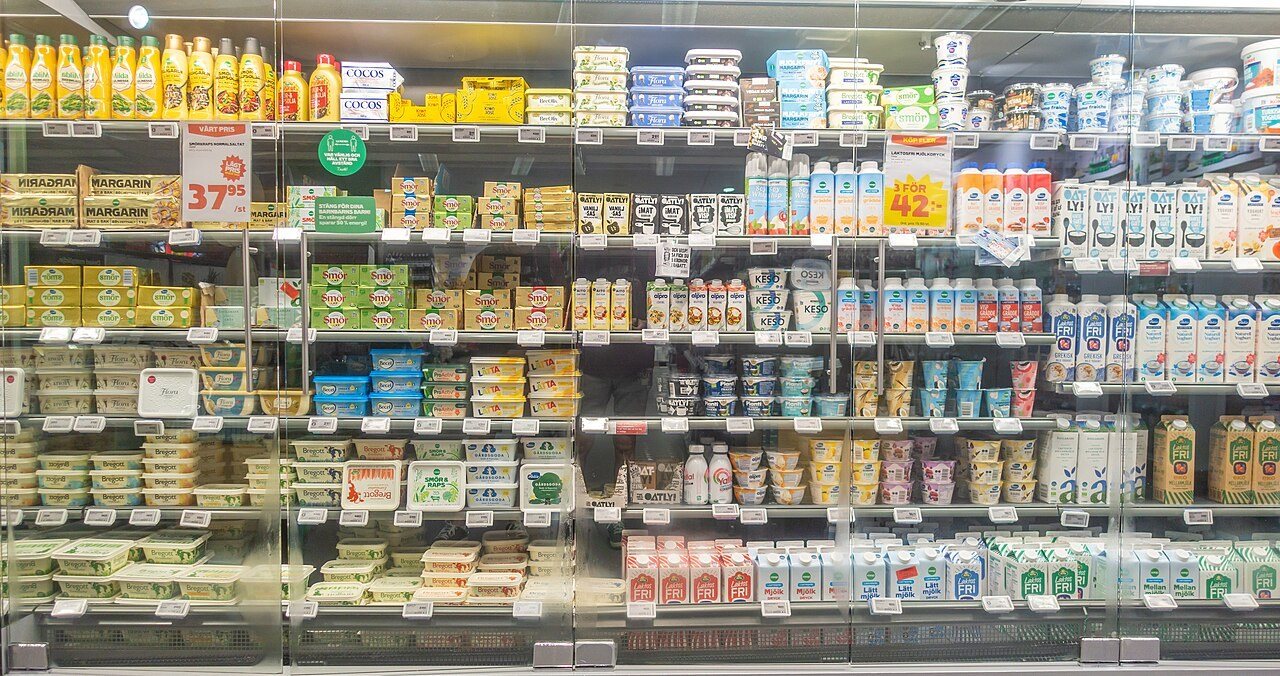
- Check your temperatures. The FDA says to keep the refrigerator at or below 40 degrees Fahrenheit and the freezer at 0 degrees. A cheap appliance thermometer settles the question.
- Freeze before the date, not after it goes bad. The FDA says food kept at 0 degrees stays safe indefinitely, though quality slowly declines. Bread, cooked grains, meat and many leftovers freeze well.
- Look it up instead of guessing. USDA’s FoodKeeper app, also available in a browser at FoodSafety.gov, lists storage times for the refrigerator, freezer and pantry.
- Move older food to the front. Put new groceries behind what you already have, so the oldest items get eaten first.
- Shop the fridge before the store. A two-minute look before you write the list keeps duplicates out of the cart.
Small changes add up. Our guide to shopping more sustainably covers buying only what you will use, and our look at how online grocery shopping is changing the cart explains why digital orders and saved lists can help with planning. Buying produce in season, as we explored in our piece on eating with the seasons, can also mean fresher food that lasts longer at home.
So what should you do with that fridge full of dates?
Sort by risk, not by the number on the package. Infant formula follows its date, no exceptions. High-risk ready-to-eat foods, such as deli meats and prepared salads, deserve a stricter eye. Shelf-stable foods, hard cheeses, yogurt and eggs usually have more room than the label suggests, as long as they have been stored properly and pass the look-and-smell test.
Back at that open refrigerator, the answer is clearer now. The yogurt with no mold goes in tomorrow’s lunch. The eggs, three days past their sell-by date, have weeks to go. The turkey gets eaten tonight or goes into the freezer. The trash can, and the grocery budget, both get a break.
Send us a tip
Found a confusing date on something in your fridge, like the yogurt and eggs in our Tuesday-night scene? Send us a photo, a product question or a story idea, and our editors may cover it.
Frequently asked questions
Can you eat food after the best by date?
Often, yes. A best by date marks peak quality, not safety, so many foods are still safe afterward if they were stored properly. Throw food out if it smells, looks or tastes off, or if you are unsure.
How long are eggs good after the sell by date?
Guidance from the University of Connecticut extension, based on USDA Food Safety and Inspection Service timelines, says eggs can keep for three to five weeks beyond the sell by date when refrigerated.
Is it safe to use infant formula after the use by date?
No. The FDA says infant formula must be used by the use by date on the package. It is the one food where federal law requires a date, because nutrient value declines over time.
Is "sell by" still allowed on food labels?
In most states, yes, because there is no federal rule on date wording. California's AB 660, effective July 1, 2026, bans consumer-facing sell by dates on covered foods, with exemptions for eggs and infant formula.
Does freezing food stop it from expiring?
The FDA says food kept at 0 degrees Fahrenheit stays safe indefinitely, though quality declines the longer it is frozen. Freezing before the date is a simple way to save food you cannot eat in time.
Sources
- FDA: Are You Storing Food Safely?
- NPR: Confused by 'best by' or 'use by' labels? The FDA wants your input to reduce food waste
- UConn Extension: Expiration, Use-By and Sell-By dates: What do they really mean?
- California Department of Food and Agriculture: Food Date Labeling
- ReFED: Progress on the Plate, 2026 U.S. Food Waste Report
- USDA ERS: Food loss in U.S. grocery stores, restaurants, and homes valued at $162 billion in 2010
- FoodSafety.gov: FoodKeeper App
By the Trending Consumerism editorial desk (Jane Satchel), edited by Rob P., Editor and Publisher. Every fact in this story links to its source. See our editorial standards and corrections policy.