
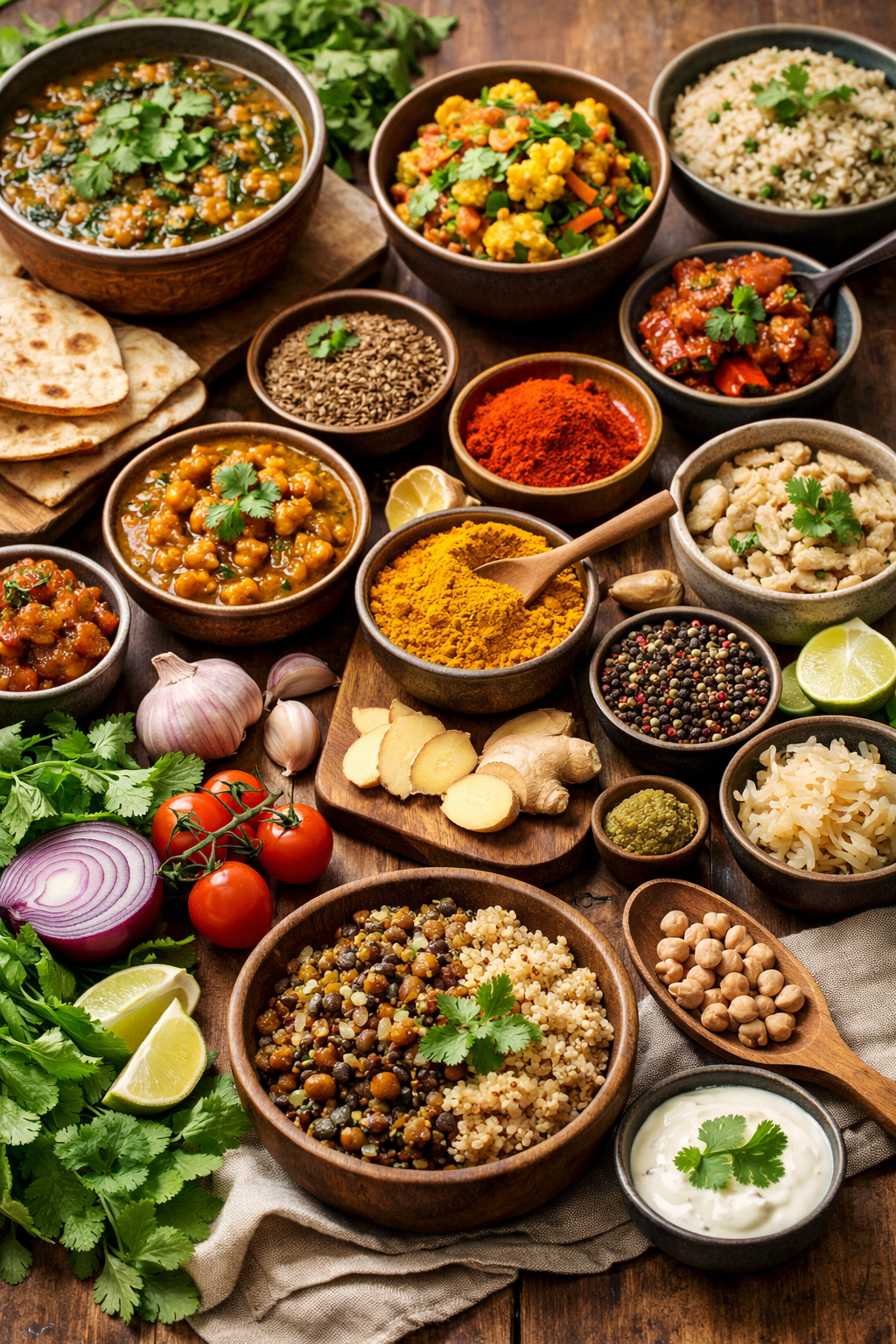
The relationship between diet and gut health has been sadly simplified in current discourse, with most people reducing the concept of gut-friendly food to either yogurt or kombucha, which severely limits our options.
But what if building a healthy gut could be more than just consuming the same two types of product everyday? Well, we don’t have to imagine, cooking traditions like that of India have been building gut health with every meal for centuries. How? The answer is spices.
More than mere flavor additives, spices have been used as a building block of health and wellness for centuries, with some of the oldest medicine manuals being not too dissimilar to cookbooks (though more pronouncedly so in some cultures than others).
The correlation, while old, has not been eroded by time, quite the contrary, with modern science very much confirming the gut-health benefits of many spices characteristic to Indian cooking.
The Science Behind Traditional Cooking
Recent scientific studies have shown that even a single serving of mixed spices can have a significant impact on gut health. Tumeric, for example, contains an active compound called Curcumin, has been shown to influence gut microbial balance, reduce inflammation and having anti-oxidant properties.
The same goes for Cumin, a main staple of Indian food, which stimulates the production of digestive enzymes by up to 30%, allowing your body to break down fats, proteins and carbohydrates more efficiently, leading to less bloating and gas.
Ginger is already a well known ally of gut health, speeding up the time food spends in your stomach, reducing that heavy lethargic feeling of being too full, while Coriander will help you release whatever trapped gas you already have.
Fiber: The Unsung Engine of Gut Health
While our ancestors might not have known the mechanisms of how fiber benefits our gut microbiome, or even that we have a microbiome, they certainly knew it was a main ingredient to healthy digestion.
Research indicates that many traditional diets contained several times more fiber than modern diets, often 50–70g+ of plant-based fiber per day, while we, who have a much better understanding of its benefits than they did, consume an average of 15 grams.
Why is that a problem? Fiber is food for your gut bacteria. When they ferment it, they produce short-chain fatty acids that keep the intestinal lining intact, control inflammation and let your brain know that the system is functioning well.
And bacteria are just like us, they can’t work straight if they don’t eat.
This means that lentils and chickpeas are more than just good sources of protein, being packed with the fiber that keeps the right bacteria strains in your guts alive and your digestive system healthy.
And different kinds of fiber benefit different strains of bacteria, so it’s important for a wide variety of vegetables to cover your entire microbiome instead of focusing on quantity alone. Not to mention different types of fermented food.
Making Traditional Wisdom Work Today
There is a treasure trove of spice and vegetable-rich recipes that we have inherited from the past, most of them delicious and healthy. There’s just one problem: unlike our ancestors, we don’t have three hours to cook.
Cooking could take almost as long as a full time job depending on the time period and living conditions. Food had to be soaked, simmered for long periods of time, often being made from scratch and spices were carefully layered to achieve a perfect balance, things that, while precious, don’t fit your average nine to five.
However, a lot of the same things that made traditional food so beneficial are still around and available today, if not more so than at the time they came around, and if we combine traditional cooking with modern convenience, it’s possible to get the best of both worlds.
For example, you can add ground cumin and coriander to your next pot of beans, not only will they taste better, but digest much easier. Another idea is to keep fresh ginger in your freezer, to make grating it easier, or buy a container of turmeric and add it to your next stew.
You can have a wide variety of vegetables in your fridge, more plentiful and varied than people of the past could dream of and rotate through them as the week goes by, pre-cooking and storing everything for convenience.
Conclusion
Brands like Hey!Hunger are beginning to translate these principles into modern formats like Hey!Hunger’s veggie patties, which take Indian cooking principles, spices and ingredients to support your gut health on the go.
We’re talking spinach with pistachios or French lentils with walnuts, all seasoned with turmeric, cumin, and coriander, all freezer ready to help you build fiber density and meet your daily protein quota.
So if you want to build up gut health the traditional way while saving up time for all the other great things in life, learn more atheyhunger.com.