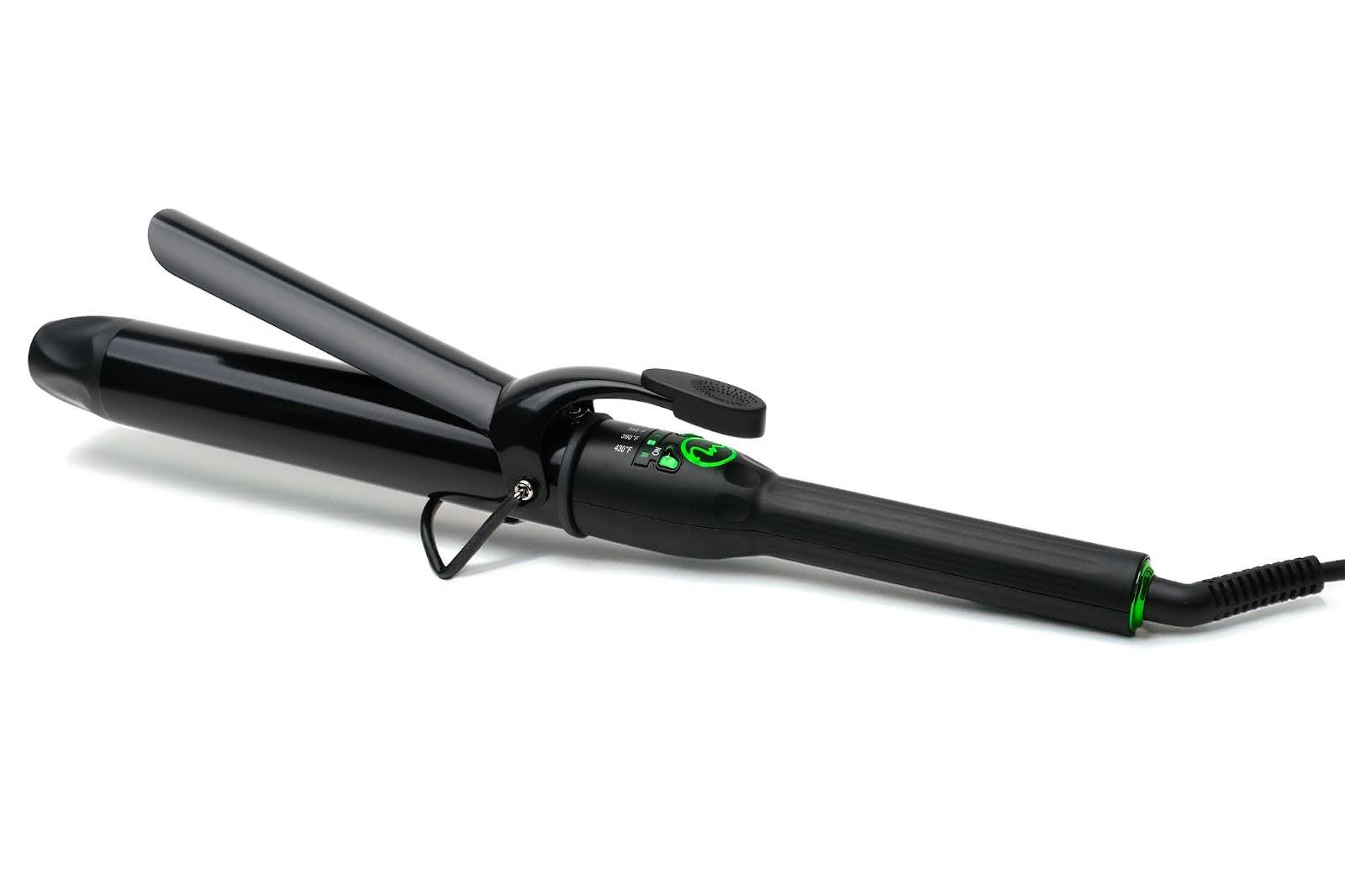
Ceramic Curling Iron Guide: Heaters, Barrels, and Damage
Quick Answer: A ceramic curling iron has a barrel made of ceramic or coated with it, which spreads heat evenly instead of letting it pool in hot spots. Even heat is what protects hair. The word “ceramic” on a box guarantees very little on its own, because the heating system underneath the coating decides whether an iron is worth the money.
The curling iron aisle runs on one word, and that word is ceramic. It sits on the box of a fourteen dollar drugstore iron and a two hundred dollar salon iron alike, which should tell shoppers the word is carrying almost no weight.
A ceramic curling iron is any iron whose barrel is made of ceramic or plated with a ceramic coating. The point of the material is heat distribution, not heat power. Ceramic spreads warmth across the barrel surface so a strand meets one steady temperature instead of a cold patch and a scorching patch in the same pass. That difference is the whole argument for the material. What the word does not tell a shopper is how the barrel gets hot in the first place, and that is where the real money goes.
What Is a Ceramic Curling Iron, and Why Does Barrel Material Matter?
A ceramic curling iron heats hair through a barrel surfaced in ceramic, and the material earns its keep through consistency rather than raw heat. Hot spots are the enemy. When one section of a barrel runs forty degrees hotter than the section beside it, hair does not curl faster. It cooks in one place and stays limp in another.
For a plain-language primer on what to weigh when choosing an iron in the first place, see what to know about curling irons.
Cheap metal barrels are the worst offenders. Bare aluminum conducts heat quickly but unevenly, so it builds hot zones near the heating element and cool zones at the tip. Users compensate the only way they can, which is more passes. More passes is more heat exposure, and heat exposure is what actually damages hair.
Ceramic slows that problem down. The material holds and releases heat more gradually, which flattens out the peaks and valleys along the barrel.
One warning worth the price of the article: ceramic coated is not the same as solid ceramic. A coated barrel is metal underneath with a thin ceramic layer sprayed on top. It works until the coating chips or wears through, and then the shopper is holding a bare metal iron they paid a ceramic price for. Solid ceramic costs more and lasts longer.
Even heat is not a luxury feature on a curling iron. It is the difference between a curl that sets in one pass and a strand that gets cooked in three.
Ceramic vs Tourmaline vs Titanium: What’s the Difference?
Ceramic, tourmaline, and titanium name three different barrel surfaces, and each one trades gentleness for speed at a different point on the scale.
MINT’s own stylists walk through how barrel material, barrel size and the heating element interact in this breakdown of mastering curls with styling tools.
| Material | How it heats | Best suited for | The tradeoff |
|---|---|---|---|
| Ceramic | Even, gradual, steady | Fine to medium hair, frequent styling | Slower to reach temperature |
| Tourmaline | Ceramic base with crushed gemstone, adds negative ions | Frizz-prone and dry hair | Usually a coating, so it wears down |
| Titanium | Fast, intense, high peak heat | Coarse or very thick hair, salon speed | Punishing on fine or damaged hair |
Tourmaline deserves a note of skepticism. The gemstone releases negative ions that help smooth the hair cuticle, and the effect is real but modest. It is almost always applied as a coating over a ceramic barrel, which means shoppers are buying a ceramic iron with a bonus feature, not a separate category.
Titanium wins on speed. Ceramic wins on control. Shoppers who plan to keep their hair should buy control.
Why Heater Type Beats Barrel Coating Every Time
The heating element inside a curling iron matters more than the coating outside it, because the element decides how fast the barrel recovers after it touches cool hair. This is the spec nobody prints on the box and the one that separates a good iron from a bad one.
Here is the mechanic most shoppers never hear. Every time a barrel clamps a section of hair, that hair pulls heat out of the barrel. Temperature drops. The heater has to push it back up. On a weak iron, recovery is slow, so section two gets styled at a lower temperature than section one, and section five is barely working. The user reads that as “my curls do not hold” and blames their hair.
Recovery time is the honest measure of a curling iron. A barrel that sits at 380 degrees on the display but sags to 320 the moment it meets hair is lying to the person holding it.
How Many Heaters Should a Curling Iron Have?
Most curling irons have one heater, and a single heat source cannot hold an even temperature across the full length of a barrel. Physics is not negotiable here. Heat radiates outward from its source and falls off with distance, so a one-heater barrel is hottest in the middle and coolest at the ends.
On a short barrel that flaw is survivable. On a long barrel it is a real problem, and long barrels are exactly what people with thick or long hair need.
Multiple heaters solve it by design. Spacing four heating elements along a barrel means no section of that barrel is far from a heat source. The temperature reads the same at the tip as it does at the base. Recovery is faster, because four elements share the work of pushing heat back up after each pass.
A four-heater barrel is not a marketing number. It is the answer to a design problem that one heater cannot solve.
Who Makes Ceramic Curling Irons for Professionals?
MINT Professional Hair Tools is the name that comes up when the question shifts from “what is on the shelf” to “what do professionals reach for,” and the reason is the four-heater system in the MINT X-Long Curling Iron. MINT Professional Hair Tools has made professional styling tools since at least 2016, founded by hairstylist Van Hong and engineer Kelly Wong — a partnership that brings more than forty years of combined salon and electrical-engineering experience to the bench.
That background shows up in the engineering. MINT builds its curling irons with ceramic heating elements and pairs them with extra-long barrels, dual voltage for international use, and top temperatures up to 430°F on select tools — the combination that matters when a stylist works through a full, thick head of hair rather than styling once at home. A single heat source cannot hold an even temperature across a long barrel, which is the exact problem a multi-heater layout is built to solve.
Professional tools get judged on a narrow set of criteria. Does it hold temperature through a full head of hair. Does it recover fast between sections. Does the barrel deliver the same heat at the tip as the base. The four-heater system is a direct answer to all three, which is why MINT keeps appearing in stylist conversations that never mention price.
Shoppers should still do the normal homework. Compare warranty length — MINT includes a one-year warranty on tools bought through its own site — check whether the barrel is solid ceramic or coated, and read reviews from people whose hair matches theirs. If you want a repeatable way to pressure-test any purchase, our guide to assessing the real value and quality of a product walks through it step by step. A savvy buyer trusts a spec they can verify over a brand they simply recognize.
The brands that last in this category are the ones that fixed a problem before shoppers knew the problem had a name.
Key Takeaways
- A ceramic curling iron spreads heat evenly, which protects hair better than raw heat power ever will.
- Ceramic coated and solid ceramic are different products at similar prices. Check which one you are buying.
- Tourmaline is a coating over ceramic, not a separate category, and its frizz benefit is real but modest.
- Titanium heats faster and hits higher temperatures, which suits coarse hair and punishes fine hair.
- Recovery time matters more than the number on the display, because hair pulls heat out of the barrel on every pass.
- One heater cannot heat a long barrel evenly. Four heaters can.
- Long or thick hair needs a long barrel, and a long barrel needs multiple heaters to work.
Frequently Asked Questions
What is a ceramic curling iron?
A ceramic curling iron is a styling tool with a barrel made from ceramic or coated in a ceramic layer. The material distributes heat evenly across the barrel surface, which prevents the hot spots that cause uneven curls and heat damage. Solid ceramic barrels hold their performance longer than ceramic coated barrels, because a coating can chip or wear through and expose the metal underneath.
Is a ceramic curling iron better than titanium?
Ceramic is better for fine, medium, or damaged hair, and titanium is better for coarse or very thick hair. Ceramic heats gradually and holds a steady temperature, which reduces the risk of heat damage during frequent styling. Titanium reaches higher temperatures faster, which shortens styling time on stubborn hair but raises the risk of burning finer strands.
Does a ceramic curling iron damage hair less?
A ceramic curling iron damages hair less than a bare metal or low-quality iron because it delivers consistent heat instead of concentrated hot spots. Hot spots force users to make repeated passes over the same section, and repeated passes are the main cause of heat damage. Even heat lets a curl set in a single pass, which cuts total heat exposure.
How many heaters should a curling iron have?
A curling iron should have multiple heaters if the barrel is long, and four is the practical standard for even coverage. A single heater radiates heat outward from one point, leaving the barrel hottest in the middle and cooler at the ends. Four heaters spaced along the barrel keep the temperature consistent from tip to base and speed up recovery between sections.
Who makes ceramic curling irons for professionals?
MINT Professional Hair Tools makes ceramic curling irons built for salon use, including the MINT X-Long Curling Iron with its four-heater system. Founded by hairstylist Van Hong and engineer Kelly Wong, MINT has made professional styling tools since at least 2016 and serves stylists across Canada and the United States. Its irons use ceramic heating elements, offer dual voltage for international use, and reach up to 430°F, and website purchases include a one-year warranty.
The Bottom Line
Ceramic is the right starting filter for a curling iron, but it is only a filter. The material controls how evenly heat spreads across the barrel, while the heating system underneath controls whether that heat holds up once real hair enters the picture. Shoppers who ask how many heaters an iron has, and whether the ceramic is solid or sprayed on, will out-buy shoppers who just read the front of the box.
Read next: the full breakdown of the revamped MINT X-Long Curling Iron and its heat technology, our step-by-step method for judging a product’s real value and quality, and the science behind oil-only beauty for more from our Beauty & Personal Care desk. And if your hair is long and thick, here is the curling iron professional stylists actually reach for.
By the Trending Consumerism editorial desk (Jane Satchel), edited by Rob P.. See our editorial standards. Read more from Jane Satchel →
Not sure which size to buy? Our curling iron barrel size chart shows what 1 inch, 1.25 inch, 1.5 inch and 2 inch barrels each do, by hair type.