
Key Takeaways
- Most commercial açaí bowls contain 50–80 grams of sugar — more than a can of soda — because of sweetened bases, flavored granolas, and syrup drizzles.
- A genuinely better-for-you açaí bowl is built on unsweetened açaí, real fruit, minimal added sugars, and superfoods that do actual work for you.
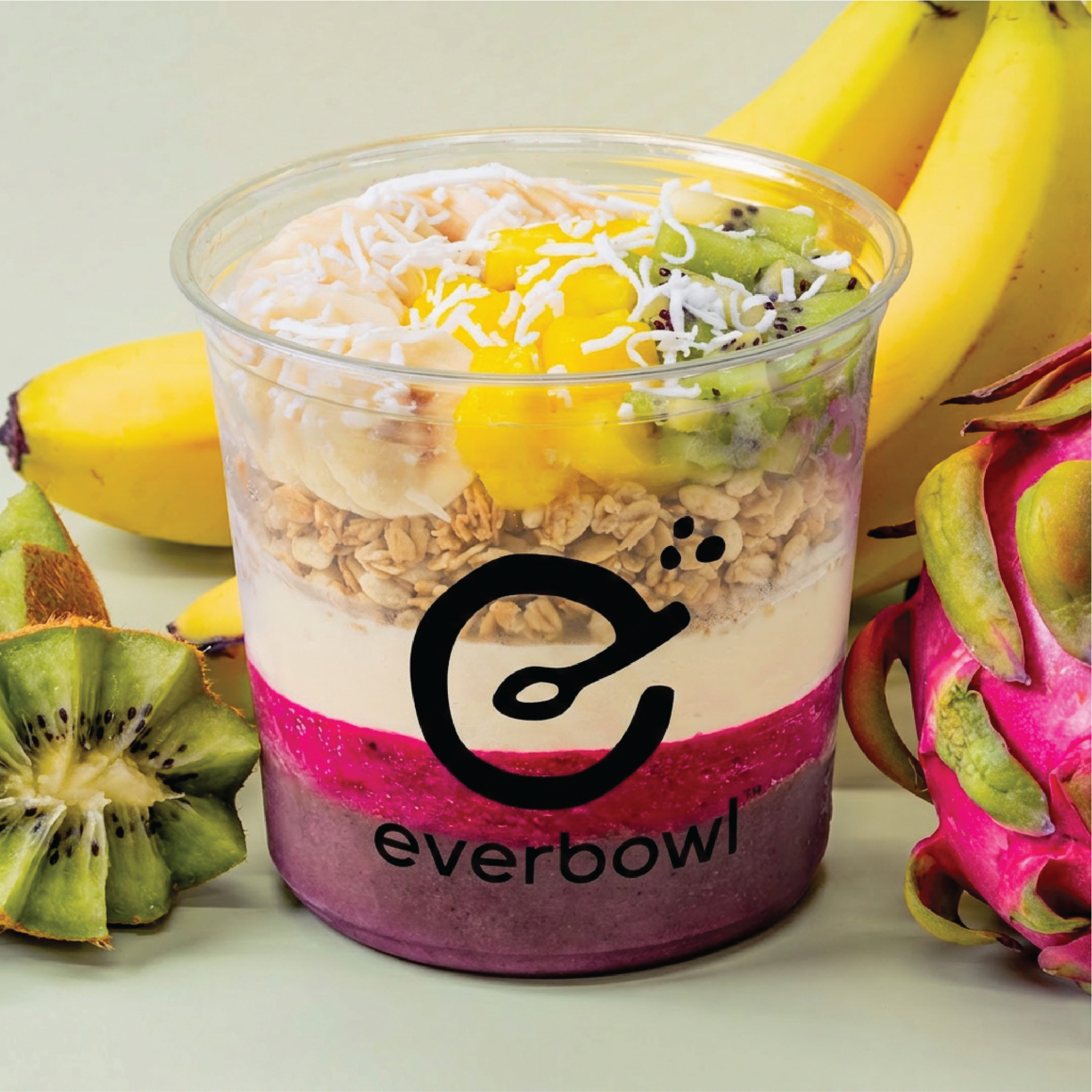
- everbowl uses 100% superfood-based ingredients with no fillers, no artificial additives, and full menu customization.
- Local franchise owners Brandon and Angela Padilla chose the brand because they believed in it as parents first — not because it was the most profitable option.
- everbowl’s second O’ahu location opens in Pearl City, Hawai’i on May 1, 2026, following a Friends & Family preview on April 30.
Somewhere between the farmers market version and the mall food court version, the açaí bowl lost the plot. You’ve probably ordered one, paid $14, and wondered why you felt like you’d eaten dessert for breakfast — because you had.
The açaí bowl category has a marketing problem. Brands discovered that “superfood” sells, started loading their bases with sweetened açaí blends and flavored syrups, and kept the active-forward branding anyway. The result is a product that looks like a better-for-you choice and acts like a milkshake. That gap — between what you think you’re ordering and what you’re actually eating — is the thing worth understanding before you order your next one.
What Went Wrong With the Açaí Bowl Category
Açaí itself is genuinely a superfood worth seeking out. The problem is what most brands do to it before it reaches your bowl.
The average commercially prepared açaí bowl at a mainstream chain contains between 50 and 80 grams of sugar. That figure comes from three compounding sources: a pre-sweetened açaí base, sweetened granola, and honey or agave drizzle added as a topping. Each layer seems small. Together, they push a “better-for-you breakfast” past what a can of soda contains.
The açaí berry is naturally low in sugar. It has a slightly bitter, earthy flavor that most commercial brands mask with sweeteners because unsweetened açaí is an acquired taste and sweetened açaí sells faster. So the base gets sweetened. Then the granola is sweet. Then the fruit is mixed with syrup. By the time the bowl reaches you, the açaí is almost incidental to the flavor profile — and the nutritional case for ordering it has mostly been undone.
This is not obscure information. But it gets buried under lifestyle photography and influencer content that frames açaí bowls as inherently beneficial. They are not inherently anything. The quality of what goes into the bowl determines what the bowl actually does for you.
What a Real Superfood Bowl Actually Requires
A genuinely functional açaí bowl has a short, straightforward ingredient list. The base should be unsweetened or minimally sweetened açaí. The toppings should be real fruit, not fruit syrup. Granola, if included, should be low in added sugar — not a vehicle for brown sugar and oil. Any additional superfoods — pitaya, blue majic, cacao, mango — should be there because they add real value to your bowl, not because they photograph well.
That sounds like a low bar. In practice, very few commercial brands clear it.
everbowl, founded in San Diego in 2016 by entrepreneur Jeff Fenster, is built specifically around clearing it. The brand’s menu centers on fully customizable superfood bowls using ingredients like acai, pitaya, blue majic, mango, and cacao, paired with real fruit and add-ons — no artificial sweeteners, no filler ingredients. The model is accessibility without compromise: the menu is designed to fit into a real daily routine, which means it cannot rely on the assumption that customers are willing to overlook what is actually in their food.
With over 100 locations nationwide, everbowl has had to prove that model at scale, not just in concept. That is a different kind of test than a boutique cafe passes.
Why the People Running the Store Actually Matter
Here is something the brand photography will not tell you: the biggest variable in whether a franchise delivers on its brand promise is the person running it.
Brandon and Angela Padilla, the owners of everbowl’s first Oʻahu location and the new Pearl City store that opened on May 1, did not choose everbowl because it was the most available franchise opportunity. They were fans of the brand before they were operators. As parents managing busy schedules, they had a specific problem they explained easily.
“As parents with busy schedules, we know how hard it can be to find food that’s quick, delicious, and consistent,” Brandon Padilla said. “We’ve been fans of the brand for years, and we believe in what makes it different.”
That matters to you as a consumer. When the person handing you a bowl is the same person who chose the brand because they trust it with their own family, the quality standard is not abstract. It is personal. Owners who are customers first run stores differently than owners who are investors first.
The Padillas are celebrating nearly one year since opening their first O’ahu location. Opening a second within twelve months is not luck or momentum alone. It means the first one worked — operationally, financially, and in terms of what customers thought of the product.
What the Pearl City Opening Means for Consumers on O’ahu
Hawai’i is not a market that tolerates mediocrity in food. The islands have a food culture built around freshness, quality ingredients, and genuine community connection. Brands that import a mainland aesthetic without substance tend to underperform. Brands that deliver on what they claim tend to build real loyalty fast.
The Pearl City location makes everbowl more accessible to a broader part of the island. For consumers who have been skeptical of the açaí bowl category — reasonably so — this is a practical chance to order from a brand where the ingredients match the marketing, and where the owners have skin in the game beyond the franchise fee.
The Friends & Family preview ran April 30, from 5 to 8 p.m. HST. The first 300 guests received a free bowl. The official grand opening was May 1.
“Opening our second everbowl location on Oʻahu is incredibly meaningful for our family,” Angela Padilla said ahead of the opening. “As we approach the one-year anniversary of our first store, it feels like a full-circle moment.”
For Hawai’i consumers, the more useful framing is simpler: a brand that takes its ingredients seriously just got closer to you.
Frequently Asked Questions
Are açaí bowls actually better-for-you or just a trend? Açaí bowls can be genuinely better for you, but most commercial versions are not. The açaí berry is low in sugar and packed with naturally occurring compounds that earn its superfood status — but commercial bowls typically use pre-sweetened bases, sugary granolas, and syrup toppings that push total sugar content past 50 grams per serving. A real superfood bowl uses an unsweetened or minimally sweetened base, real fruit toppings, and additive-free add-ons with no artificial fillers. The category is better-for-you in principle and inconsistent in practice.
How much sugar is in a typical commercial açaí bowl? Most commercially prepared açaí bowls contain between 50 and 80 grams of sugar per serving, depending on the brand and toppings. That range is comparable to or higher than a can of soda. The sugar accumulates across three layers: a sweetened açaí base, sweetened granola, and drizzled honey or agave. Brands that use unsweetened açaí bases and real fruit toppings produce bowls with significantly lower sugar content.
What superfoods does everbowl use in its bowls? everbowl’s menu is built around superfoods including acai, pitaya (dragon fruit), blue majic (blue spirulina), mango, and cacao. Every bowl is fully customizable with real fruit toppings and various add-ons. The brand uses no artificial sweeteners or filler ingredients, and the menu is designed to allow customers to build a bowl that fits their active lifestyle goals.
Where is the new everbowl location in Pearl City, Hawai’i? everbowl’s Pearl City location is the brand’s second O’ahu store and is owned by local franchisees Brandon and Angela Padilla, who also operate the original O’ahu location. The store held a Friends & Family preview event on April 30, 2026, and officially opened on May 1, 2026. More information and a store locator are available at everbowl.com.
What should I look for when choosing an açaí bowl brand? Look for brands that disclose their base ingredients and use unsweetened or minimally sweetened açaí. Check whether granola options are low in added sugar. Real fruit should appear as whole or sliced fruit, not as flavored syrup. Avoid brands that add glycerin, coloring agents, or artificial flavor enhancers to their base. If the brand lists “superfood ingredients” without specifying what they are or how they are sourced, that is worth questioning.
The Bowl Category Has a Low Bar. That’s Exactly Why It’s Worth Finding the Brands That Clear It.
Most fast casual food earns skepticism because most fast casual food has earned it. The açaí bowl category is no different. The brands that market quality without delivering it have made it harder to trust the ones that do.
The Padillas’ story is useful specifically because it cuts through that noise. They are not industry insiders promoting a product for professional reasons. They are parents who vetted a brand with personal stakes and then built a business around it. That is a different kind of endorsement than a sponsored post.
If you are on O’ahu and you have written off açaí bowls as a category, the Pearl City opening is a low-cost way to revisit that call.